Use AI to support development.
AI support for development tasks and decisions, including vulnerability fixing and requirements discovery, with evaluation and human involvement.
Explore AI studiesI connect research and practice to investigate how to build software with AI, evaluate AI systems, and support the people who make it happen.
Let’s talkExplore my work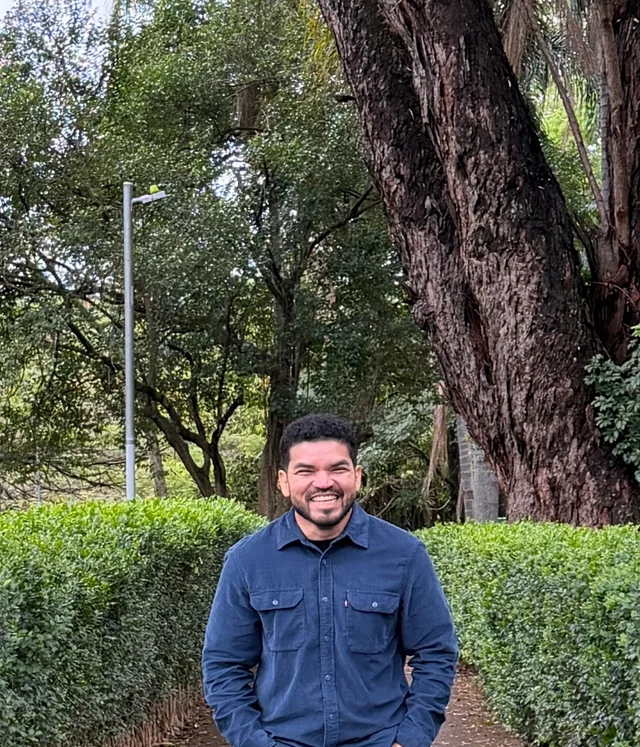
I am a professor at the Faculty of Computing of the Federal University of Mato Grosso do Sul (UFMS), coordinator of its graduate program in Computer Science (PPGCC) for 2025–2026, and coordinator of the Software Engineering Laboratory (LEDES).
I hold a PhD, a master’s degree and a bachelor’s degree from the Federal University of Amazonas (UFAM).
My experience spans the Nokia and Microsoft developer ecosystems, developer communities, and projects with companies and public institutions. My research brings together people, processes and AI in Software Engineering.
Full background on LinkedInProfessor, researcher and software engineer. LEDES coordinator since 2021 and PPGCC coordinator for 2025–2026.
Research collaborator and AI engineer.
Technical Specialist, following my PhD at UFAM.
Software Engineering research and teaching as an assistant professor in 2017–2018.
From an internship and software development to Technical Evangelist and Developer in the Nokia and Microsoft ecosystems.
Projects connecting organizational challenges, scientific investigation and education. Explore the context, my role and the evidence behind each area.
I collaborate with companies and institutions on software and AI projects, applied studies, DevRel and technical education. My background combines development, research, coordination and developer communities.
I coordinate pantanal.dev, an immersive training program connecting students from Brazil’s Central-West region with digital challenges from B3, PDtec, Neoway and BLK.
Participants develop solutions through direct interaction with industry professionals, bringing together Software Engineering, Data Science and AI. The second cycle began in 2025.
The Hyacinth macaw paper presents project-based learning for Software Engineering for AI. Related student research explores DevOps education through role-play, fairness testing, metamorphic testing, bias and vulnerabilities.
Read the SBES 2023 paperRead the DevOps role-play study2011 AND 2012Nokia Developer Champion
Six years in Developer Relations in the Nokia and Microsoft ecosystems, in Brazil and Latin America, included developer training, hackathons, conferences and technical team leadership.
I coordinated research on DevRel in software ecosystems (2020–2024) and positive interactions in Software Engineering teams (2023–2024). This background also informs consulting work for companies including Itaú and Jusbrasil.
Approximately 1,300 developers trained and 500 apps built by supported developers in the Nokia and Microsoft ecosystems. Historical indicators from my work at INdT.
DevGo and studies on DevRel roles and skills connect professional practice to research. Student research also explores ecosystem discontinuation and the experience of LGBTQIAPN+ people in agile teams.
Explore the DevGo modelRead the skills studyRead the inclusion studyI work as an engineer on projects developed with the Court of Justice of Mato Grosso do Sul (TJMS) and the State Attorney General’s Office (PGE-MS).
Project areas include finding case law, automating the collection of initial claim information, extracting information from legal proceedings, and supporting the preparation of legal responses.
I also coordinate the Technological Residency in Intelligent Software Engineering, connecting professional education to these institutional challenges.
My role: software engineering within the projects and residency coordination. These areas describe partnership scope; the studies below are related research.
A project started in 2025 investigates case analysis and legal document production, particularly for healthcare claims, alongside expert calculations and data integration. Related student research examines agentic AI architecture risks, security tactics for AI architectures and requirements discovery using language models.
Related paper: fairness testing in RAG systemsSince 2024, I have participated in projects on AI for public governance in higher education and an observatory of Brazil’s National Graduate Education System.
Their objectives include supporting the national advanced training agenda and monitoring education and intellectual output across all 27 Brazilian federative units. The AI initiative is part of CAPES’s strategic institutional project P12.
Since 2023, I have coordinated research on project management in research funding foundations, using BPMN process modeling to support requirements and business rules for a management platform.
Related topics include public-data transparency, in Wallynson Rodrigo Henrique da Silva’s 2022 undergraduate thesis, and AIOps architecture for software product monitoring, in Rafael Rogado Ribeiro Sobrinho’s master’s research started in 2025.
I coordinated the Software Engineering project for the educational game Museu das Mulheres Negras (Des)conhecidas (2023–2024), connecting a virtual museum with learning about Black women’s histories and contributions.
I also participated in the Cooperativism Observatory and Solidarity Economy evaluation platform (2022–2025), supporting PRODES with information for governance and public policy.
Gilvan Ferreira Alves Junior’s 2023 undergraduate research explored Software Engineering for the museum game. Related publications address accessibility in educational resources and games, alongside the Humap pocket library app for health education and access to knowledge.
Read the educational games studyRead the Humap pocket library paperI investigate the technical and human dimensions of Software Engineering, with attention to the changes introduced by AI.
AI support for development tasks and decisions, including vulnerability fixing and requirements discovery, with evaluation and human involvement.
Explore AI studiesRequirements, architecture and testing for systems incorporating AI. Topics include metamorphic testing, fairness and bias in retrieval-augmented generation (RAG).
Explore quality studiesDevRel and Developer Experience (DevX) connect these areas to working relationships, inclusion, talent retention and Software Engineering education.
Explore studies on peopleFirst place in the SBES Software Engineering and SBSI Information Systems thesis competitions.
Brazilian Computer SocietyMember of the Latin America program for higher education faculty.
Recognized for reviewing in the ICSE Software Engineering in Practice track.
2017 · SBC Third place in Brazil’s national Computing master’s thesis competition.
Student awards: undergraduate and master’s researchSelected papers and their contributions to research and practice.
Using AI in development and evaluating the quality of systems that incorporate language models.
ContributionMetamorphic tests to diagnose retriever bias and evaluate graph-based mitigation in RAG systems.
Read the paperContributionPSECO-SafePatch: in the case study, average fixing time decreased by 84%, with an 89% patch success rate and human validation.
Read the paperEcosystem governance, value creation, inclusion, collaboration and talent retention.
ContributionDevGo: a developer governance model with four focus areas, six stages and 62 lessons learned from DevRel practitioners.
Read the paperContributionInvestigates value creation in DevRel from practitioners’ perspectives.
Read the paperContributionInvestigates ecosystem death signals and the consequences of platform discontinuation for developers and communities.
Read the paperContributionInvestigates the experience of LGBTQIAPN+ people in agile software teams.
Read the paperContributionTR4SEM: a talent retention support framework developed through a study with 21 Software Engineering managers in Brazil.
Read the paperEvidence to understand technical debt, reliability and software evolution.
ContributionAnalyzes merge-related code comments to investigate technical debt in software projects.
Read the paperContributionBrings together academic and practitioner literature to understand Site Reliability Engineering adoption.
Read the paperProject-based learning and the development of technical and interpersonal skills connected to practice.
ContributionCombines collaborative learning and role-play to develop interpersonal skills in remote Requirements Engineering education.
Read the paperContributionA project-based learning program to develop talent in Software Engineering for AI.
Read the paperI supervise undergraduate theses and research projects, as well as master’s and PhD research at PPGCC/UFMS.
Initial studies, problem investigation and solution development in Software Engineering, AI, DevRel and Developer Experience.
Research into the technical and human dimensions of Software Engineering. Check the program’s admissions calls and requirements.
PPGCC admissionsInclude your educational background, intended level, the problem you are curious about and your availability. An initial idea is enough to start a conversation.
Discuss supervisionShared research interests are the starting point. Supervision availability, funding and admission depend on institutional conditions and selection procedures. My teaching covers verification, validation and testing, configuration management, and software projects.
Award-winning jointly supervised research. In 2022, Luiz Alexandre Martins da Costa’s master’s thesis, supervised by Rodrigo Santos and me, received first place in the SBSI, SBQS and WAMPS competitions.
2022 · Raphael Arruda de Oliveira
First place, SBSI CTCCSI. Supervision: Awdren Fontão and Bruno Cafeo.
Recognition from students. Chosen as graduation speaker (paraninfo) by the FACOM/UFMS Software Engineering classes of 2023.2, 2025.1 and 2026.1, and as honored patron by the classes of 2024.1, 2024.2 and 2025.2.
I contribute to research evaluation and organize opportunities for exchange in Software Engineering.
Committee service includes ICSE (SEIP and SEET), MSR, ESEC/FSE, CHASE, SBES, IHC and SBQS.
Reviewing recognition at ICSE-SEIP, SBES, SBQS, SBSI and VEM is documented in my Lattes CV.
Lattes CVI share ideas and findings on DevRel, Developer Experience and value creation.
A reflection on DevGo in light of practitioners’ accounts, supported by NotebookLM and the author’s readings.
Read on dev.to (Portuguese)Connecting developer experience to relationships among engineering, product and communities.
Read on dev.to (Portuguese)A study involving 24 professionals from ten countries on technical and interpersonal skills.
Read on dev.to (Portuguese)Efficiency, retention, complementarity and innovation, discussed through research with DevRel practitioners.
Read on dev.to (Portuguese)Conversations about research, careers, and bringing people and technology together.
DevRel in organizations, business value and professional development.
Strategy · Value creation · Education
Watch on YouTubeProfessional practice, content, community participation, inclusion and accessibility.
Careers · Communities · Inclusion
Watch on YouTubeThe work of DevRel teams, their roles, skills and indicators.
Roles · Skills · Metrics
Watch on YouTube
Research, software and the people who build it. The conversation continues on Instagram.
Follow on InstagramFor scientific collaboration, supervision, industry projects and professional opportunities.
awdren.fontao@ufms.brFor a first conversation, share your context, objective and the contribution you are looking for.